

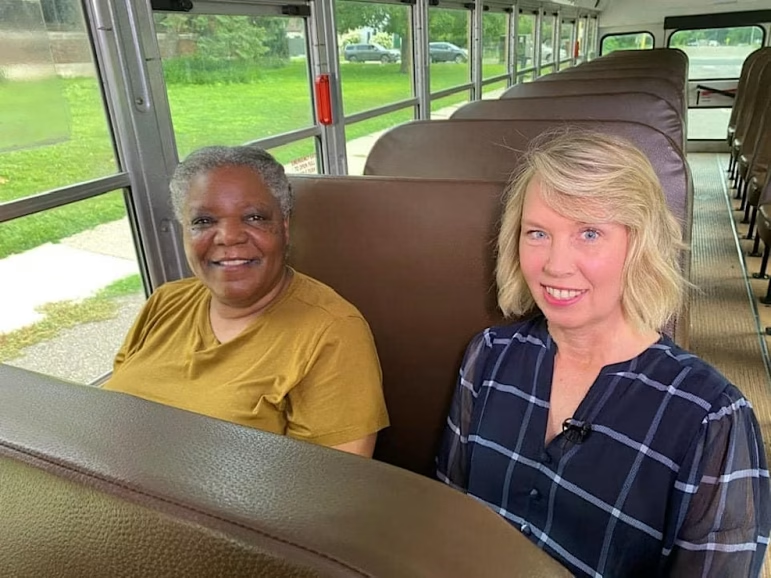
The Legacy of Brown v. Board in Minnesota
Seventy years ago, the Supreme Court ruled in Brown v. Board of Education that racial segregation in schools was unconstitutional. It was a landmark decision that promised a new era of equality in education. But in Minnesota, as in much of the country, the struggle for true integration didn’t end with that ruling—it only shifted to a different battlefield.
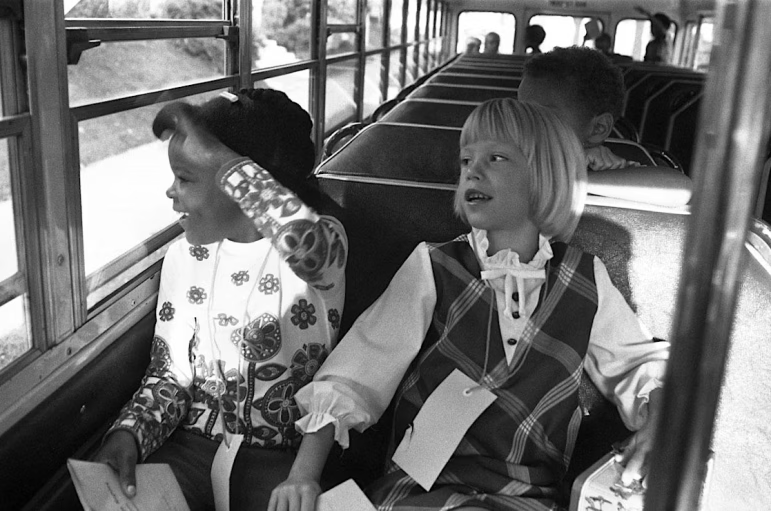
On Sunday, March 2, the Parkway Theater will host a screening of Separate Not Equal – Minnesota’s Integration Story, a documentary that revisits the 1971 Hale-Field Pairing. This bold but controversial move was one of Minnesota’s attempts to address racial disparities in education. The film, inspired by the Hennepin History Museum’s Separate Not Equal exhibit, brings this chapter of history back into focus—at a time when its lessons feel more urgent than ever.
A Community’s Fight for Fairness
The Hale-Field Pairing was a direct response to de facto segregation in Minneapolis schools. Rather than waiting for a federal mandate, local leaders paired a majority-Black school (Field) with a majority-white school (Hale), aiming to create a more racially balanced learning environment. It was a groundbreaking effort—one that met both praise and resistance.
For many Black families, integration was supposed to mean access to better resources, better opportunities, and an equal shot at success. But too often, integration came with an unspoken expectation: that Black students would conform to white educational spaces rather than those spaces adapting to a truly multicultural reality. This tension is not just historical—it’s ongoing.
Where Are We Now?
Minnesota’s education system still struggles with racial disparities. Despite the efforts of past generations, the state has some of the widest achievement gaps in the country. Schools may no longer be legally segregated, but economic and social factors have maintained many of the same divides that Brown v. Board sought to eliminate.
As we gather to watch Separate Not Equal, the conversation cannot end with nostalgia or self-congratulation. We must ask: What does true integration look like today? How do we ensure that Black students aren’t just placed in diverse classrooms, but truly supported and empowered within them?
An Invitation to Engage
The March 2 screening isn’t just a history lesson—it’s a call to action. A community Q&A will follow the film, offering a space for reflection, discussion, and the opportunity to push for policies that build on past lessons.
Tickets are free, but reservations are required. Secure your spot at this link.
If you care about the future of education in Minnesota, this is a conversation you don’t want to miss.
Separate Not Equal: Closed captioning???
Great question! I reached out to them to ask them if they are included. I will let you know when they respond!
Thoughts on bringing a 10 and or 12 year old to this screening?