
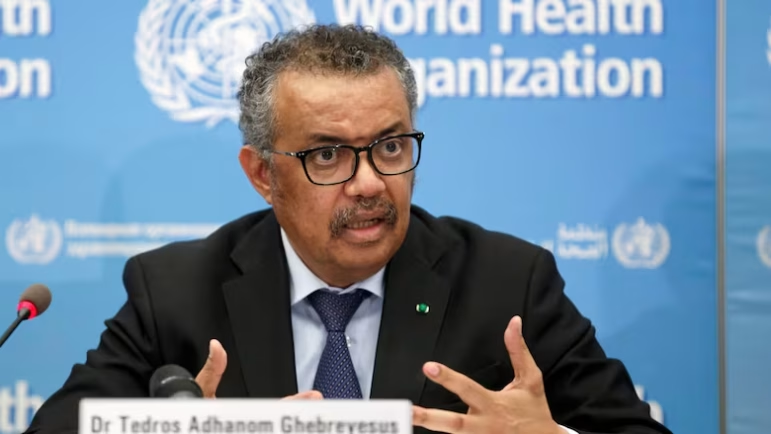
Member states of the World Health Organization voted overwhelmingly this week to adopt the first international pandemic agreement, a landmark treaty designed to strengthen global systems for preventing, preparing for and responding to future pandemics.
The vote took place at the Seventy-eighth World Health Assembly in Geneva on May 19, marking the end of more than three years of negotiations. No country opposed the measure. However, the United States — historically the WHO’s largest financial contributor — was notably absent from the session.
The U.S. absence stems from President Donald Trump’s 2020 first-term decision to begin the formal process of withdrawing the country from the WHO, criticizing the organization’s early response to Covid-19 and alleging that it had been overly influenced by China. Although President Joe Biden reversed that decision shortly after taking office in 2021, lingering political tensions and uncertainty over U.S. recommitment to global health frameworks have hampered full reengagement. As a result, the U.S. has not yet signed on to the treaty and remains outside the agreement’s initial adoption phase.
“The world is safer today thanks to the leadership, collaboration and commitment of our Member States to adopt the historic WHO Pandemic Agreement,” said WHO Director-General Tedros Adhanom Ghebreyesus following the vote. “This agreement is a victory for public health, science, and multilateral cooperation.”
The 30-page treaty outlines a comprehensive strategy for managing future pandemics, including strengthening disease surveillance in animals to reduce the risk of zoonotic spillover, accelerating information-sharing among countries, and improving the distribution of personal protective equipment, vaccines and treatments.
Still, the agreement’s effectiveness remains uncertain. It lacks binding enforcement mechanisms and secured financial commitments. Analysts say the absence of the U.S. — a major architect of the treaty in earlier negotiations — weakens its global clout and complicates its path to implementation.
Also unresolved are some of the treaty’s most contentious components. Member states postponed decisions on how vaccines, treatments, and diagnostic tools will be shared with lower-income countries in exchange for access to genetic data on emerging pathogens. Negotiations over these provisions are set to continue over the next year.
The current draft sets a voluntary target: Pharmaceutical companies and governments should commit to donating or offering at reduced prices at least 20% of all pandemic-related medical products developed during a crisis. The details of how that will be achieved remain vague.
Before the treaty can go into effect, at least 60 countries must ratify it through their own domestic processes, a step that could take well over a year. The U.S. is unlikely to reach that point in the near future given its current non-participation.
The treaty is the first legally binding international health agreement approved under Article 19 of the WHO Constitution since the Framework Convention on Tobacco Control was adopted in 2003.
As part of the next phase, the WHO will convene an Intergovernmental Working Group in July to finalize a treaty annex that outlines the rules for sharing pandemic-related technologies and to begin coordinating implementation efforts — an undertaking WHO officials say will be grounded in equity, transparency, and global solidarity.
Jasmine McBride welcomes reader responses at jmcbride@spokesman-recorder.com