

The Gilded Age Fashion Shows Black Elegance and Resistance
HBO’s The Gilded Age revives the opulence of the 1880s through fashion designed by Kasia Walicka-Maimone. For Black characters, style is more than elegance — it is resistance, respectability, and cultural pride. From Peggy Scott’s ambitious wardrobe to the refined looks of the Scott and Kirkland families, clothing signals both social standing and survival.

HBO’s The Gilded Age has captured audiences with its sharp storytelling and rich character arcs, but its fashion is just as compelling. Designed by Kasia Walicka-Maimone, the wardrobe does more than clothe the cast. It revives the opulence, tension, and cultural assertion of the late 19th century. For Black characters, clothing is never just about elegance. It is about signaling power, navigating race and class boundaries, and writing themselves into the historical record.
Fashion as resistance and self-definition
In the 1880s, Black high society used style as both expression and survival. Tailored suits, corseted gowns, elaborate hats, and fine jewelry were symbols of refinement and respectability. These choices projected confidence in spaces where Black presence was often challenged. The Gilded Age highlights this reality, using fabric, color, and silhouette to show how the Black elite positioned themselves within—and at times against—the rigid rules of white upper-class society.
Peggy Scott: A young voice with style
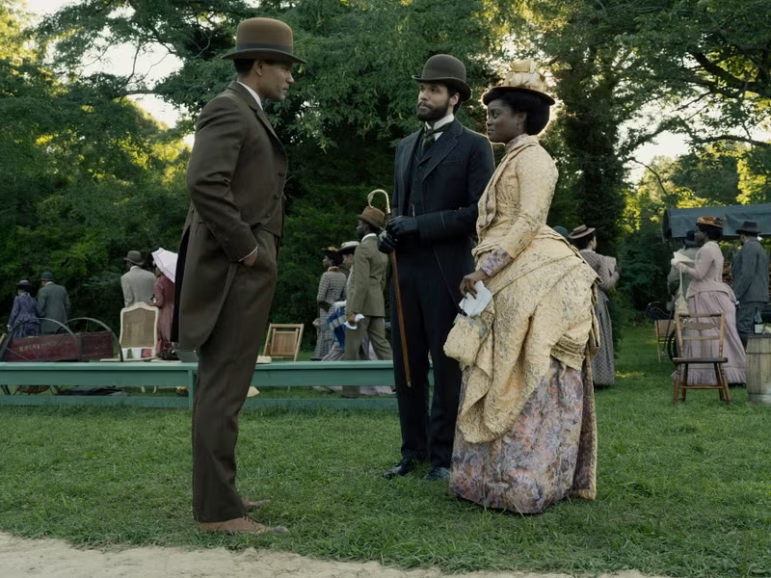
At the heart of the story is Peggy Scott, played by Denée Benton, a journalist whose career and personal life take her across New York and beyond. Her wardrobe mirrors her ambition: structured blouses, tailored coats, and gowns that merge tradition with vibrancy. From the delicate pink gown with butterfly adornments she wears at the opening of the Brooklyn Bridge to the bold yellow dress she sports at a baseball game, Peggy’s fashion signals both sophistication and determination.
The Scotts: A family of grace and refinement
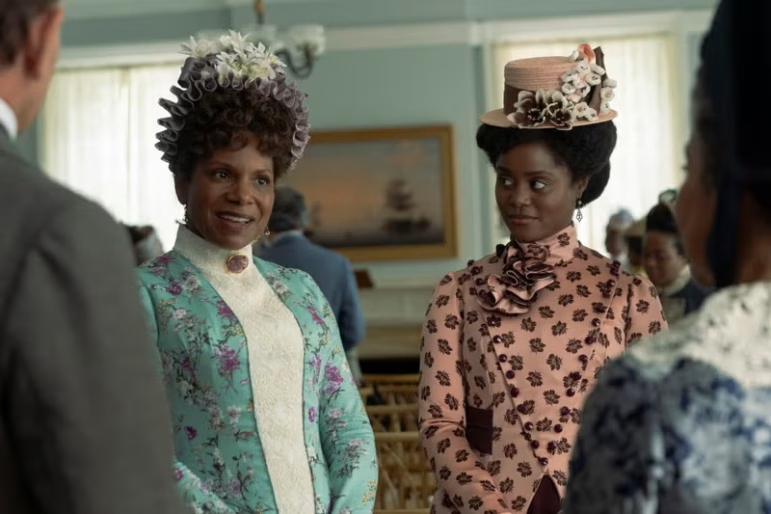
Peggy’s parents, Arthur and Dorothy Scott (John Douglas Thompson and Audra McDonald), embody the dignity of Brooklyn’s Black upper-middle class. Arthur’s precise tailoring and Dorothy’s gowns—often in bold colors like sky blue or adorned with jewels—reflect the family’s upward mobility and community standing. Together, they represent how a Black family carried itself with refinement and pride despite racial hostility.
The Kirklands: Old money, new challenges
Season three introduced the Kirkland family, portrayed by Jordan Donica, Phylicia Rashad, and Brian Stokes Mitchell. Their fashion reflects generational wealth and rigid tradition. Elizabeth Kirkland (Rashad) epitomizes old-money style with white gowns, delicate stitching, and understated accessories. Her son William’s polished suits reinforce that aesthetic, while their social outlook underscores the tension between preserving tradition and embracing change.

The bigger picture
Through costume, The Gilded Age illustrates contrasts within Black high society itself—between young professionals like Peggy charting new paths and established families like the Kirklands maintaining lineage and legacy. Clothing becomes a visual dialogue about respectability, aspiration, and cultural pride.
Placed alongside white elites such as the fictional Russell family, whose “new money” aesthetic is bold and experimental, the wardrobe of Black elites underscores not only their social positioning but also their insistence on defining themselves on their own terms.
A legacy in fabric
The show’s costuming reminds us that fashion has never been only about beauty. For Black Americans in the 19th century, it was a form of resistance, a claim to belonging, and a projection of possibility. By dressing Black characters in gowns, suits, and accessories equal in elegance to their white counterparts, The Gilded Age reframes history: Black presence was always part of this era, shaping culture while demanding recognition.
Some of the drama’s most powerful scenes unfold not only through dialogue but also through stitching, fabric, and color. Style here is more than aesthetic. It is survival, influence, and liberation.