

More than 40 men gathered at Urban Touch Barbershop in South Minneapolis on March 29 for an event that was equal parts community reunion and call to action. The 2026 Barbershop Final Four Men’s Wellness and Mentor Recruitment Kick-Off, hosted by Twin Cities CARES Mentoring Movement, brought together four generations of Black men, young boys, fathers, uncles, grandfathers and faith leaders in a space designed to feel familiar.
“From the moment the brothers arrived, the atmosphere felt like stepping back into the heart of the traditional barbershop,” said Darlene Bell, executive director of Twin Cities CARES Mentoring Movement. “Real conversations unfolded naturally.”
The barbershop setting was intentional. For Darrell Thompson, president and CEO of Bolder Options, a beneficiary organization of the event, the choice of venue spoke directly to the event’s purpose.
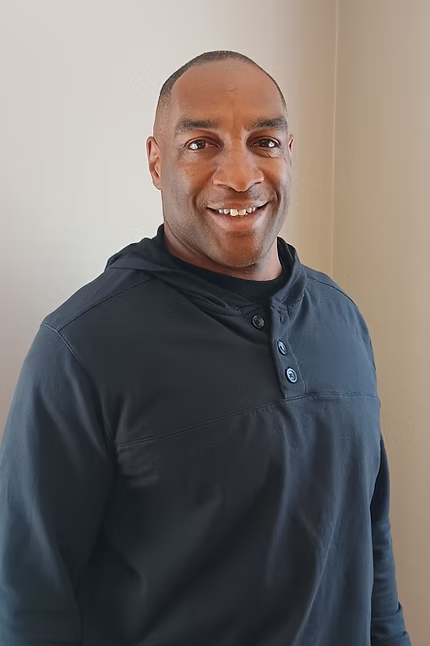
“Barbershops have a sense of comfort,” Thompson said. “There’s camaraderie, laughter… Sometimes it’s serious, sometimes it’s sports, sometimes it’s spiritual. That element is impactful.”
The evening combined food, storytelling and discussion about men’s wellness with a concrete goal: recruiting Black men to serve as mentors for Twin Cities youth. For Thompson, whose organization has served thousands of young people across Minneapolis, Rochester and St. Paul in its 33 years, the need is urgent.
“There are young men that need to see somebody that looks like them, that cares about them, that has walked in the same shoes,” Thompson said. “To go into a room and see 25 other men of color, that was impactful to all of us.”
Curtis Bell, who co-leads Twin Cities CARES alongside his wife Darlene, said the barbershop setting helped men lower their guard and address deeper issues before turning outward to mentor others.
“In order to go out and help the community, we have to deal with the things that men are struggling with,” Bell said. “Like the analogy on the plane, put your own oxygen mask on before helping others. We need to take care of ourselves before we can take care of others, and while we’re doing so, we want them to know that we need them as mentors.”

Bell, who grew up on the south side of Chicago surrounded by negative influences, said his personal experience shaped his commitment to the work. He credits mentors, including his father-in-law, with helping him become the man and mentor he is today.
“In order to see a man, in order to be a man, you’ve got to see a man,” Bell said. “They need to see men that look like them succeeding, men that care about their emotional and academic support and can coach them on how to move forward in life.”
Thompson echoed that sentiment, adding that Black men with imperfect pasts should not count themselves out.”In order to go out and help the community, we have to deal with the things that men are struggling with,” Bell said. “Like the analogy on the plane, put your own oxygen mask on before helping others. We need to take care of ourselves before we can take care of others, and while we’re doing so, we want them to know that we need them as mentors.”
Bell, who grew up on the south side of Chicago surrounded by negative influences, said his personal experience shaped his commitment to the work. He credits mentors, including his father-in-law, with helping him become the man and mentor he is today.
“In order to see a man, in order to be a man, you’ve got to see a man,” Bell said. “They need to see men that look like them succeeding, men that care about their emotional and academic support and can coach them on how to move forward in life.”
Thompson echoed that sentiment, adding that Black men with imperfect pasts should not count themselves out.

“Just be honest with yourself and be honest with us, we need you and we want you,” he said. “Some of the best mentors we’ve had are some that have had a little bit of a past. Not everyone lives a storybook life.”
Thompson said the long-term impact of mentorship keeps him going after more than three decades in the work. A young man who had been on his caseload 27 years ago recently returned to the Bolder Options office.
“He remembered his mentor’s name. He remembered that we didn’t let him drink pop in the program. He said, ‘I still hear those people in my head,'” Thompson said. “When someone comes back from that long ago and talks about the impact, that re-inspires me.”
Darlene Bell’s own mentorship story spans more than two decades. Her first mentee through Big Brothers Big Sisters of the Greater Twin Cities was 11 years old.
“She is now 34 or 35, and she still sits with me at recruitment events,” Bell said. “She came into our life as a stranger, but she is definitely family. She calls me and Curtis mom and dad, and her daughter is now our granddaughter.”
Twin Cities CARES, an affiliate of the National CARES Mentoring Movement, founded by former Essence magazine editor-in-chief Susan L. Taylor following Hurricane Katrina in 2005, serves as a recruitment hub, connecting trained mentors with organizations and schools across the metro. The organization was reestablished in the Twin Cities two years ago.
The wellness and mentorship series is expected to continue on a quarterly basis. Those interested in becoming a mentor or learning more can visit twincitiescares.org or bolderoptions.org.
Jasmine McBride welcomes reader responses at jmcbride@spokesman-recorder.com.