
Overview:
As burnout reaches crisis levels across every generation, licensed clinical social worker Vernique Esther and neurodivergent therapist Christine Harris explain the racial and systemic roots of hustle culture and why opting out is not a personal failure but a necessary act of survival.

Vernique Esther’s father died early this year due to complications from heart disease and lung cancer, something she said metastasized because he was not connected to his community.
Though estranged, Esther could turn on the TV and see her father with news correspondents speaking on current events as a geopolitical leader in the Republic of Benin. Even with his multiple degrees, books written and other accolades, at the end, Esther found out that there was work he was doing that he never finished.
“The achievements and the accolades, there’s always a temptation to get another one,” she said. “But I don’t think that we value what it does to our bodies and to those around us when we forsake everything for those aims. It’s literally never worth it.”
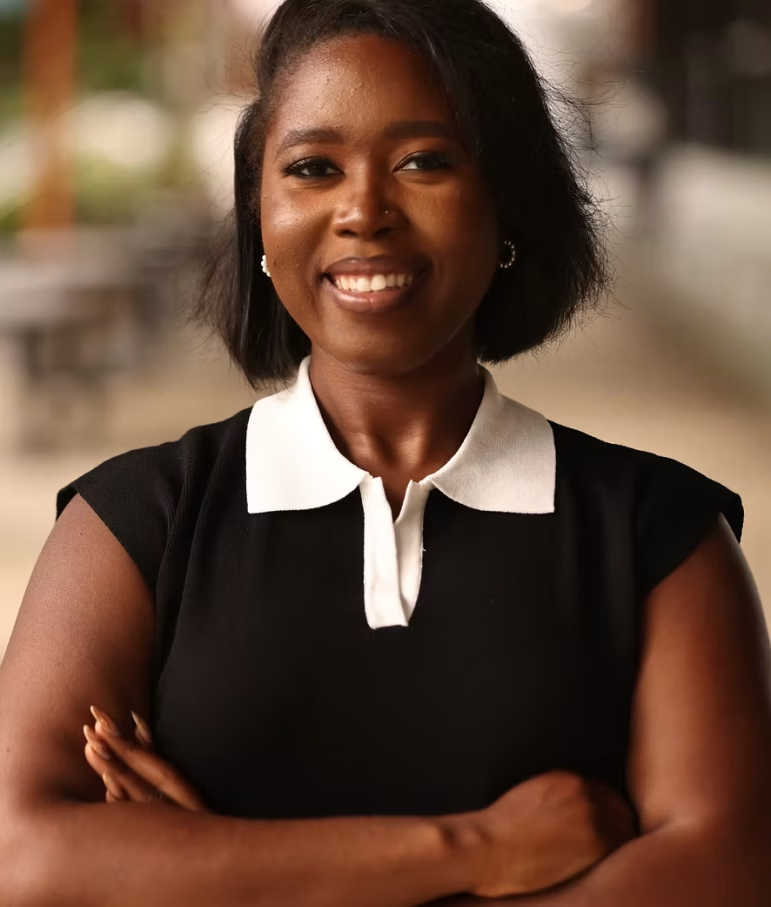
This lesson was key to Esther’s own journey in stepping away from hustle culture this year. She has limits on her week, with work banned completely on Sundays. She goes outside and has taken up skating while still getting tasks done professionally.
“Being able to find ways to move my body and honor my commitments to myself have been huge for me,” she said. “I’m still a high achiever … but I think I do it differently. Now, I slow down when I need to. I take breaks when I need to. I push the gas when I need to, but always being mindful that this is not something that I’m trying to sustain indefinitely.”
Her life feels more honest, she said.
“I’ve learned what actually matters, to strip away the fat and to not just do things because it’s there and available, to not just work a job because of the financial aspect. But what else matters to me? Is it lifestyle? Is it flexibility?”
More people are stepping away from hustle culture, redefining what success looks like outside of a workplace. The subtle lifestyle changes are shaping wellness and social spaces, including more communal healing events.
Eighty percent of millennials say hustle culture leads to burnout and/or health issues. Across every other demographic measured, more than half of each generation agreed, according to a September 2024 survey by Monster.
Esther, a licensed clinical social worker, therapist, mental health influencer and founder of Soleil Therapy and Wellness in Atlanta, believes it’s important to understand where work practices came from to understand their effect on people, especially those of color.
Hustle culture is embedded in American work culture and is highly connected to the Protestant work ethic, which is foundational to Western Christianity, she said.
An example she gave is that in the Protestant work ethic, how hard you work and the outcomes of that work are correlated to your closeness to God.
“While that seems super random, that has also been infiltrated throughout the foundations of American culture and even down to why we have a five-day work week instead of a four-day work week,” Esther said. “When we translate that to people of color, especially Black people in this country who have always been seen as a work product, we internalize it in even more ways and in more insidious ways.”
For white Americans, hustle culture can look like working all day, oftentimes on the backs of other laborers, with social capital through marriage and generational wealth, along with familial styles and supports that allow them to stay home longer or work longer, and access to self-care and insurance. By comparison, Black residents may carry generational trauma and ideas that work is connected to survival, not just passion.
The expectations placed on Black people through ideas such as Black excellence, which connotes that Black people are only excellent when they are hyperachieving, push the group to continue pressing toward hustle culture, Esther said.
Opting out of this culture is scary but necessary, she said.
“The system that was built on our backs is not willing to give anything back to us for the ways that we have labored.”

Christine Harris, an autistic and ADHD therapist who works exclusively with other neurodivergent people, defines hustle culture as a value system that prioritizes constant productivity, output and achievement; often at the expense of well-being, self-care, rest and health sustainability.
“It encourages people to override our own physiological limits in order to keep up with these external demands that are really in the long run unrealistic,” she said.
The problem, not only for neurodivergent people, but for everyone, is that their nervous systems are not designed to function that way, Harris said.
“We are not built for this continuous efficiency, urgency, increasing productivity and all of this stress without time to recover from it.”
Burnout can affect those with autism to the point of skill regression, Harris said.
“I think that’s just a really extreme version of showing how much this burns people out.”
Harris said she is seeing more people, especially those who are neurodivergent, experiencing exhaustion, and those who can are opting out entirely.
“I think just the fact that it’s so widespread is not showing that it’s like any kind of personal failure or lack of resilience,” she said. “It’s just people reaching the limits of what their bodies and their minds can actually tolerate.”
More than half of each generation views hustle culture as an outdated approach to working, the Monster survey shows. Factors that affect whether someone can opt out, and to what degree, include economic demands and caregiving needs.
“You might not have the option to opt out of this, you might be forced to just continue pushing yourself on and on and on, no matter how badly it affects you, because this is just what you need to do to survive in this society,” Harris said. “It is very, very much a systemic issue.”
Esther believes the results of the 2024 presidential election fueled people’s recent change in values and lifestyles. Many Black women realized they cannot be good enough for a capitalistic society that only sees them as a work product, she said.
“We saw ourselves in Kamala [Harris], to have been the most qualified presidential candidate and still be seen as not good enough.”
This, along with Donald Trump’s presidency, has led people to take more breaks, take more time off and invest in their families and hobbies, Esther said.
In her practice, working primarily with high-achieving women, Esther helps deconstruct ideologies that keep them in those work cycles. One method she created is called “trauma languages,” which helps people identify burnout. A lot of the time, Black people feel disconnected from their existence and from their bodies, she said, causing them not to realize when they are overworked until it’s too late.
“I work really hard to help [clients] reframe work and themselves, and for them to see themselves more clearly outside of what they do, and give them language and methodologies to detangle with them and for themselves.”
As success moves away from being defined by how much someone works, it moves toward how people feel once they clock out.
“I think the work used to be enough for itself, or we told ourselves it was the title, the money, whatever social status comes with it, but I think more and more of us are realizing that ‘if my life is lacking, then the work means nothing,'” Esther said.
Now, the question is who people are and what they are doing when they’re not working, and whether it’s worth the work, she said.
“For a lot of women that come through my practice, they’re realizing it’s not.”
As people rework how their lives look, social spaces that prioritize communal health, from restorative yoga classes to curated community dinners, are increasing.
This is something Esther said she is working toward doing more of creating more communal opportunities to slow down, not just for her clients.
“I think putting ourselves in our community first is so important,” Esther said. “I want to highlight the community aspect because communal healing is so much more important than we realize … We need each other now more than ever and I think that we have to invest in our own local and hyper-local and global communities in order to survive, resist and excel.”
Harris said she is encouraged to see more people opting out of hustle culture.
“I see it as more of a corrective response to a system that is really very destructive to people in general. This is not sustainable, so I think more and more people are realizing that.”
Damenica Ellis welcomes reader responses at dellis@spokesman-recorder.com.